
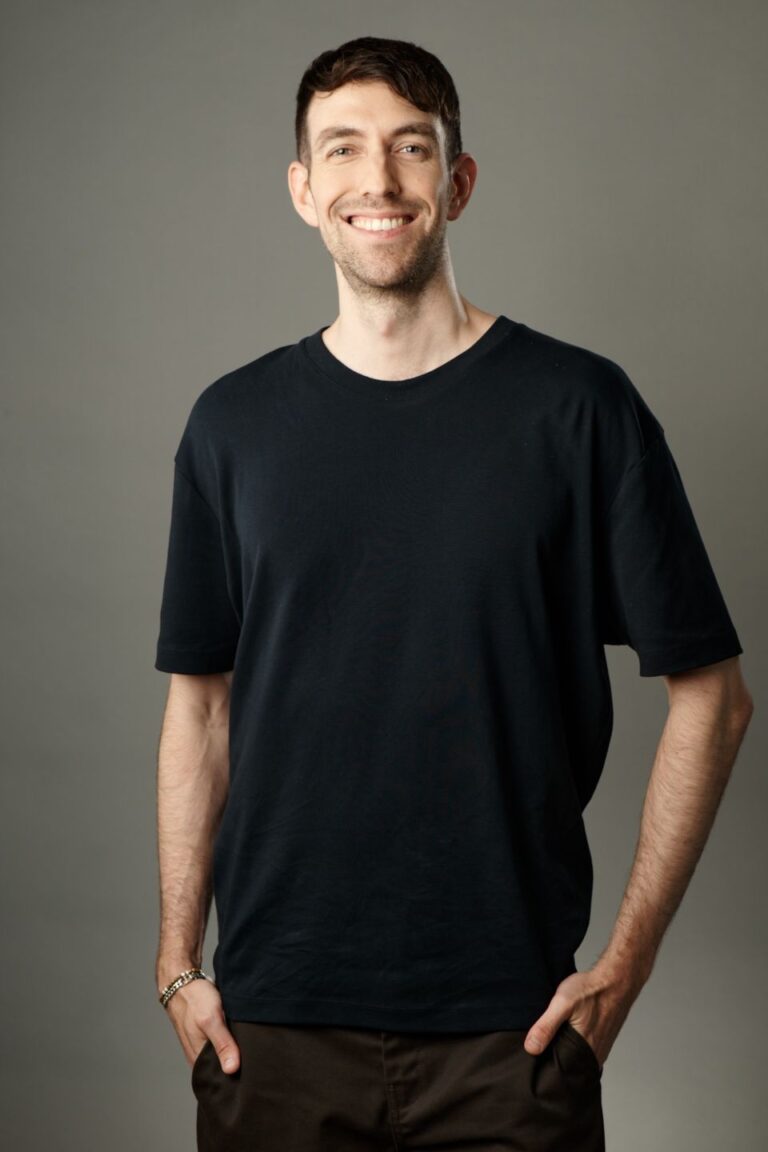
Kfir Fleischer's Speaker Profile
His AI Found Over 1,000 Zero-Days. Nobody Told It Where to Look. Fifteen Years Attacking and Defending Nations Taught Kfir Fleischer Exactly What to Build.
Meet Kfir Fleischer, VP Product & R&D at Dream, the $3B company building sovereign cyber defense for nations. Everything his team builds has to run sealed inside a government’s own network: no internet, no outside models, nothing leaving the building.
As seen on





The One-Liner
(for host intros)
My guest today spent fifteen years on both sides of cybersecurity - Israeli Military Intelligence, NSO, Cyera. One thing became obvious along the way: no government can hire elite researchers fast enough to defend itself. So he built one instead. He now leads product and R&D at Dream, where his team's AI has autonomously found over a thousand zero-days and set the highest score ever recorded on Berkeley's CyberGym benchmark. Please welcome Kfir Fleischer.
Biography
Who is Kfir Fleischer?
Kfir Fleischer started where most people never get to: the operational side of cyber, inside the Israeli military. He went on to lead those operations. Most security careers begin with defense and reason backwards toward the attacker. His began with the attacker. Every move since went a layer deeper – operational security at NSO Group, built from zero into a core capability. Then hands-on low-level research. Then cloud security research at Cyera, as it scaled to a $3 billion valuation. Fifteen years, offense and defense, with government customers the constant thread.
Today he is VP Product & R&D at Dream, the $3B sovereign-AI company defending nations. He leads the researchers, product managers, and engineers behind Hero: an AI that does the work of an elite vulnerability researcher. It reverse-engineers software. It analyzes firmware and malware. It runs forensics, and takes a finding all the way to a fix. And it does all of that inside the customer’s own network, with no internet access. Hero has found over 1,000 zero-days on its own. In September its model Hercules scored 96.6% on Berkeley’s CyberGym. the highest result ever recorded.
His argument isn’t that AI is coming to cybersecurity. It already arrived, just unevenly. Attackers adopted it immediately. No compliance board, no procurement cycle, nothing legacy to protect. They got faster and bigger at once. Defenders are still working at the pace of what one analyst can read in a day. No government hires its way out of that; the researchers don’t exist in those numbers. You close it by building capability that scales without headcount.
Resources
Highlights
- VP Product & R&D at Dream sovereign AI cyber defense for nations. $3B valuation, $100M+ ARR, deployed with Western-allied governments across Europe, the Middle East, and Southeast Asia.
- Leads the team behind Hero an autonomous cyber researcher that reverse-engineers software, analyzes malware, runs forensics, and takes a finding all the way to a fix.
- 1,000+ zero-days found autonomously including pre-auth remote code execution in GNU telnetd and a full SCADA exploit chain.
- 96.6% on Berkeley's CyberGym the highest score ever recorded, achieved with no internet access and no external models.
- Helped scale Cyera to a $3B valuation as its cloud security research lead.
- Built NSO's operational security from zero into a core organizational capability then moved into hands-on low-level research.
Book Kfir Fleischer now!
Media appearances
Listen to Kfir Fleischer's previous interviews
Topics
What your listeners can learn
Topic #1
You Can’t Hire Your Way to a National Cyber Research Team
Elite vulnerability researchers are among the scarcest people on earth. No government can hire them at the scale its attack surface demands. So Kfir’s team stopped trying, and built the researcher instead. He explains what that actually took and what it means for every defender who’s been told to “just add AI.”
״We didn’t build Hero to win benchmarks. We built it to emulate an elite autonomous cyber research team at a scale governments could never achieve through hiring alone.״
Listener takeaways:
- Why researcher scarcity, not budget, is the real constraint on national defense
- What autonomous research covers beyond finding bugs
- How you trust a machine-generated finding enough to act on it
- What happens to human researchers now
Topic #2
The Highest Score Ever Recorded, and Why He Keeps Downplaying It
Hercules scored 96.6% on Berkeley’s CyberGym. The base model scored 77%. Kfir is openly uninterested in the number, a rare posture in a market where every vendor leads with a benchmark. He’ll walk you through what actually closed that gap, and where benchmarks stop telling you anything useful.
״CyberGym wasn’t the goal. it was simply one of the milestones we passed along the way.״
Listener takeaways:
- What separates a general frontier model from one built for security
- What CyberGym measures, and what it can’t
- Why post-training and tooling beat raw model scale here
- How to read any AI-security benchmark claim critically
Topic #3
Frontier Results, Zero Internet: What Sovereign AI Actually Demands
Everyone assumes on-premises means settling for less. Hero’s results came out of a sealed government network, no internet, no external models, local hardware only. Kfir has spent his career with government customers and can explain why sovereignty is an engineering problem, not a policy preference.
“Government-scale security isn’t enterprise security with a bigger budget. Different fragmentation, different constraints, different physics.”
Listener takeaways:
- Why nations genuinely cannot send data to someone else’s model
- What air-gapped and offline force on architecture
- Whether on-prem still means weaker results
- What enterprises can steal from how nations are forced to think
Topic #4
Your Suggestion…
We’ll be happy to check with the team and confirm whether it’s something they can cover in depth and deliver value to your audience.